Most people, when they think about being a good Muslim, picture prayer, fasting, and reciting the Quran. These matter deeply — but they only cover half of what Islam actually asks of a person. The other half is quieter, easier to overlook, and arguably harder to get right: how you treat the people around you.
This is the heart of two terms that come up often in Islamic teaching — Huqooq Allah (the rights of Allah) and Huqooq-ul-Ibad (the rights of people). Together, they form a complete picture of what a balanced Muslim life looks like.
What Are Huqooq Allah?
Huqooq Allah are the obligations a person owes directly to Allah — the five daily prayers, fasting in Ramadan, sincerity in worship, and turning to Him in gratitude and repentance. These acts are between a person and their Creator alone; no other human being is directly involved or affected.
Because of this, Huqooq Allah has a unique quality: Allah, out of His mercy, can forgive shortcomings in this area directly. A missed prayer made up sincerely, or a moment of weak faith followed by genuine repentance, can be forgiven without needing anyone else's involvement.
What Are Huqooq-ul-Ibad?
Huqooq-ul-Ibad are the rights owed to other people — honesty in speech, fairness in business, kindness to family, patience with neighbours, and simply not causing harm to those around you. Unlike Huqooq Allah, these rights involve a second party: another human being who can be wronged, hurt, or shortchanged.
This is exactly what makes Huqooq-ul-Ibad so significant. If you say something unkind to a friend, cheat someone in a transaction, or gossip about a family member, seeking forgiveness from Allah alone is not enough — the person you wronged has a right that only they can forgive.
Why Huqooq-ul-Ibad Often Carries Extra Weight
Many scholars point out something worth sitting with: a person can spend years focused on prayer and worship, yet still fall short simply by being harsh with their siblings, dishonest with a business partner, or careless with a neighbour's feelings. Worship builds a relationship with Allah, but it doesn't automatically repair a relationship you've damaged with another person.
This is why many Islamic scholars, including reflections found in works like Hazrat Ali Ka Majmua-e-Quran, place such emphasis on character and dealings with others — not as a separate topic from faith, but as an inseparable part of it.
How the Two Rights Work Together
Islam was never meant to separate personal devotion from everyday behaviour. A person who prays regularly but treats others poorly has only completed half the picture. Likewise, someone who is kind and fair to everyone but neglects their connection with Allah is missing the foundation that gives that kindness its deeper meaning.
The two rights are designed to reinforce each other. Consistent worship builds the humility and self-discipline needed to treat people well, while treating people well reflects whether that worship has actually shaped a person's character — or stayed only a private ritual.
Simple Ways to Reflect on Both
- For Huqooq Allah: Take a honest look at consistency — not perfection, but whether prayer and remembrance of Allah have a steady place in your day.
- For Huqooq-ul-Ibad: Think of the last disagreement, harsh word, or broken promise involving someone close to you. Has it been addressed, or quietly left unresolved?
- Weekly check-in: Set aside a few quiet minutes each week to reflect on both — this small habit keeps either side from being forgotten in the busyness of daily life.
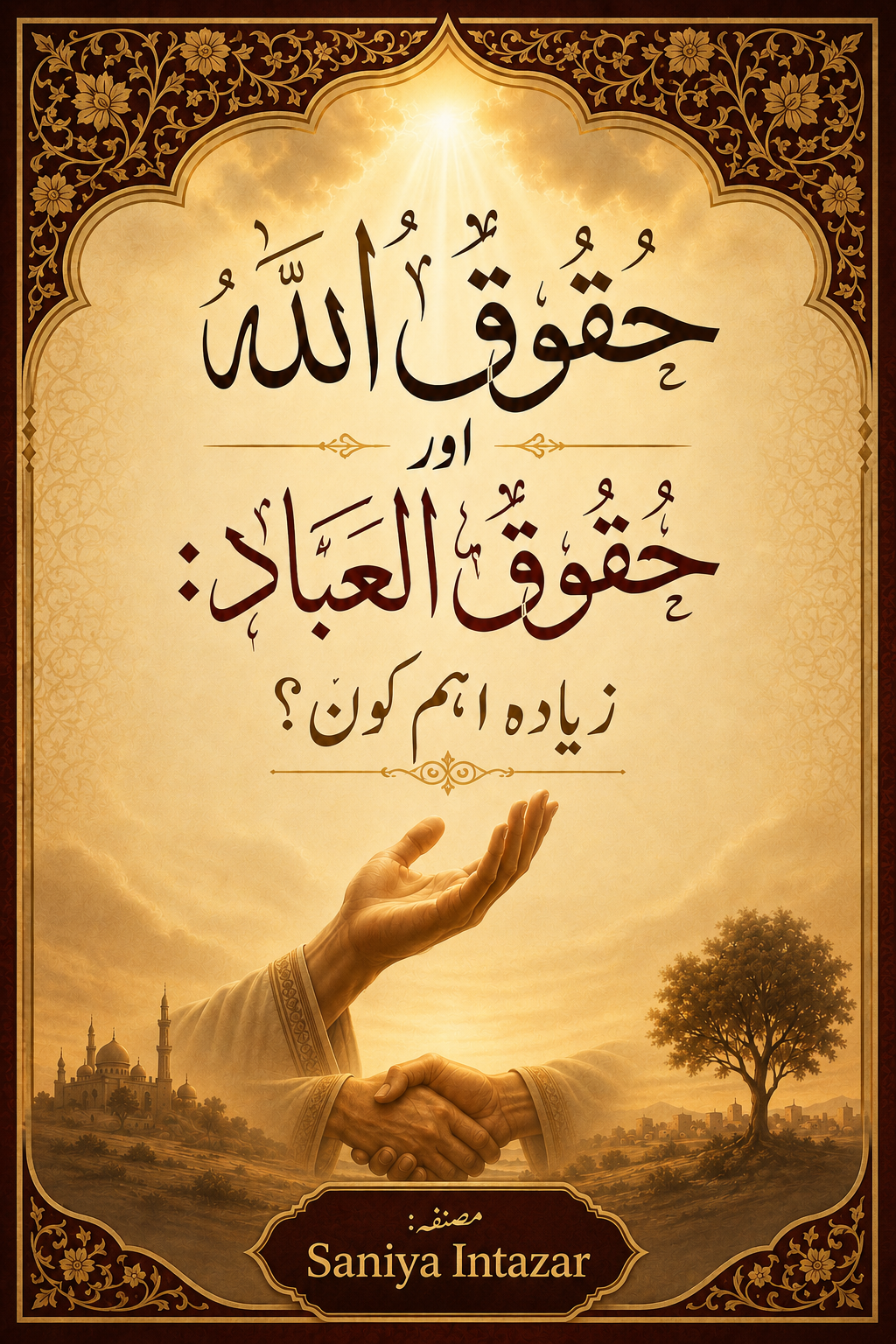
For a deeper, structured look at these two rights and how they show up in everyday situations, our book Huqooq Allah Aur Huqooq-ul-Ibad walks through both in simple, accessible Urdu. If you'd like to pair it with a book focused purely on deepening Quranic understanding, Fahm-ul-Quran is a natural companion read.
Want to explore this topic in more depth?
Read Huqooq Allah Aur Huqooq-ul-Ibad →A Balance Worth Returning To
Neither Huqooq Allah nor Huqooq-ul-Ibad is meant to be treated as the "more important" half at the expense of the other. A Muslim life finds its balance when both are given honest attention — prayer that shapes character, and character that reflects sincere worship. Returning to this balance, even imperfectly and repeatedly, is far more valuable than mastering one side while ignoring the other entirely.