Korean Skincare Routine for Beginners: A Simple 4-Step Start (No 10 Products Needed)
Korean skincare has a reputation for being complicated: ten steps, a shelf full of bottles and a wish for “glass skin”. If that makes you want to give up before you start, here is the good news. You can begin with just four simple steps and add more only if your skin needs them.
This guide explains what glass skin actually means, which of the famous 10 steps you can safely skip at first, how to build a beginner routine, and how to introduce new products without upsetting your skin. It is general information, not medical advice.
What Glass Skin Really Means
“Glass skin” describes a complexion that looks smooth, well hydrated and softly reflective, as if light is sitting on the surface. It became popular through Korean beauty culture and social media.
It is helpful to treat it as a look to aim for, not a promise. Everyone’s skin is different, and your skin type, genetics, sleep, stress, diet and sun exposure all affect how it looks, as much as the products you use. A routine can help your skin look its healthiest, but it cannot guarantee any particular finish.
The real idea behind Korean skincare is simpler and kinder than the hype: look after your skin gently, keep it hydrated, protect it from the sun, and be consistent.
Your 4-Step Starter Routine
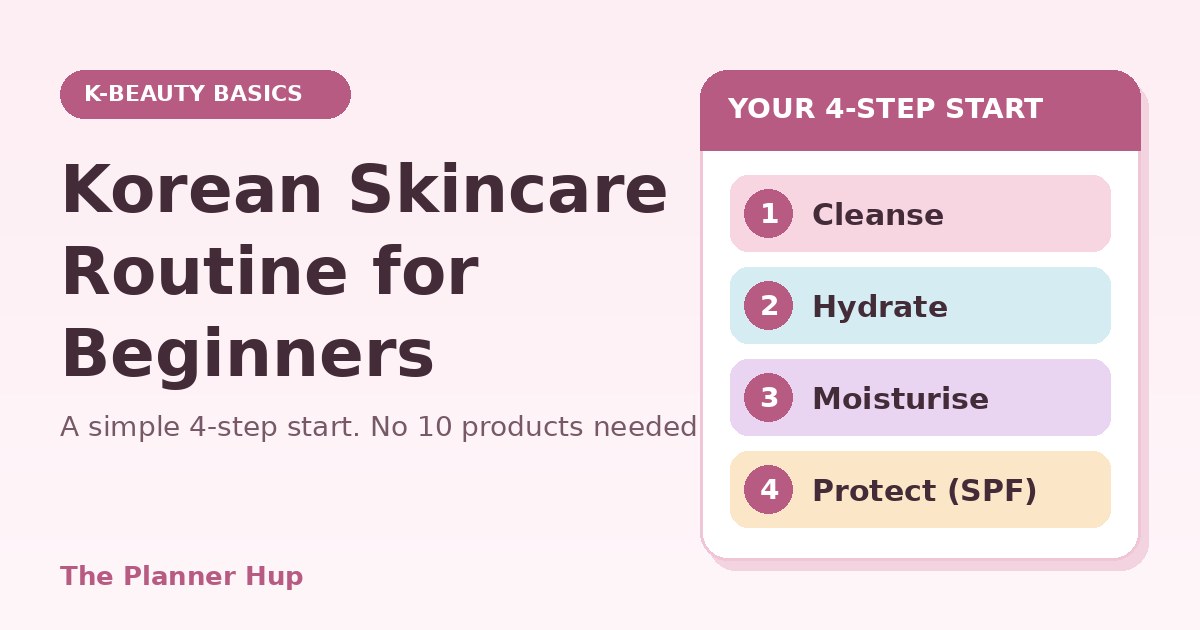
Group the steps by what they do for your skin:
- Cleanse. Use a gentle cleanser that leaves your skin clean but not tight or squeaky. If you wear sunscreen or makeup in the evening, you can start with an oil or balm cleanser first and then follow with your regular cleanser. This is often called double cleansing.
- Hydrate. Add one lightweight hydrating step, such as an essence or a gentle serum. Pat it in with clean hands instead of rubbing.
- Moisturise. Choose a moisturiser that suits your skin type and use it morning and evening to keep hydration in.
- Protect. In the morning, finish with sunscreen. It is the one step you should treat as non-negotiable.
In the morning, that can be as simple as: cleanse (or just rinse with water if your skin is dry), hydrate, moisturise, sunscreen. In the evening: remove sunscreen and makeup, cleanse, hydrate, moisturise.
Three or four products are plenty to start. It is also easier to notice problems when your routine is short.
Choosing Textures for Your Skin Type
- Oily skin: lighter textures such as gel cleansers and gel or lotion moisturisers usually feel more comfortable. Oily skin still needs moisturiser and sunscreen.
- Dry skin: creamier cleansers and richer moisturisers tend to help. Avoid cleansers that leave your face feeling tight.
- Combination skin: you may like lightweight products overall, with a richer layer on dry patches.
- Sensitive skin: keep the routine very short, choose fragrance-free products where possible, and add things slowly.
These are general starting points. If you are unsure about your skin type, a dermatologist or pharmacist can help you work it out.
How to Add Products Safely
- Add one product at a time. If you add three things on the same day and your skin reacts, you will not know which one caused it.
- Patch test first. Apply a small amount to a small area, such as the inner forearm, and wait a day or two. Do not use it on your face if you notice redness, itching or burning.
- Wait before judging. Give a new product a few weeks of regular use unless it stings or irritates.
- Be careful with strong ingredients. Exfoliating acids and similar active ingredients can irritate when overused, so start slowly and read the instructions on the pack.
- Be careful with kitchen ingredients. Lemon juice, baking soda and similar items can irritate skin when applied directly. If a home remedy stings or burns, rinse it off and stop using it.
A 4-Week Plan to Build the Habit
The best routine is the one you actually follow, so build it gradually:
| When | What to do | Notes |
|---|---|---|
| Week 1 | Cleanse, moisturise and morning sunscreen only | Learn what your skin feels like with a very simple routine. Do not add anything yet. |
| Week 2 | Add one hydrating step (essence or serum) | Patch test first. Use it morning and evening if your skin is comfortable. |
| Week 3 | Add an evening oil cleanser if you wear sunscreen or makeup | Or, if your skin is not sensitive, try a gentle exfoliant once this week. |
| Week 4 | Review | Keep what feels good, drop what does not, and write down how your skin feels. |
To keep yourself consistent, tick off each morning and evening routine on a tracker. Our free habit tracker generator makes a printable page you can customise with your own habits, and the free weekly planner gives you a simple place to note how your skin feels each week.
Common Mistakes to Avoid
- Starting with ten products. More steps means more chances of irritation and a bigger bill.
- Skipping sunscreen. Without it, the rest of the routine is working against daily sun exposure.
- Over-exfoliating. Tight, red or stinging skin is a sign to take a break.
- Copying someone else’s routine. What suits another person’s skin may not suit yours.
- Expecting overnight results. Skin changes slowly, so judge your routine over weeks, not days.
- Changing products every week. Constant switching makes it hard to know what works.
When to See a Dermatologist
A skincare routine is not a treatment. See a doctor or dermatologist if you have persistent or painful acne, a rash that does not settle, sudden changes in a mole or spot, skin that reacts to almost everything, or any condition you are unsure about. Check with your doctor before changing your routine if you are pregnant or taking prescription skin medication.
Want a Beginner-Friendly Guide?
If you would like a simple, printable starting point, our Glow-Up Korean Secrets guide covers daily Korean-inspired skincare rituals and the “Glass Skin” method in a beginner-friendly digital PDF. If you are also interested in the language, see our 7-day Hangul guide.
Frequently Asked Questions
What is a simple Korean skincare routine for beginners?
A simple routine has four jobs: cleanse, hydrate, moisturise and protect. In practice that means a gentle cleanser, one hydrating step such as an essence or serum, a moisturiser, and sunscreen in the morning. You can add other steps later if your skin needs them.
Do I need all 10 steps of the Korean skincare routine?
No. The famous 10 steps work best as a menu rather than a checklist. Many people use only four to six steps, and using fewer products is often easier on sensitive skin and on your budget.
What is glass skin?
Glass skin describes a complexion that looks smooth, well hydrated and lightly reflective. It is a look people work towards, not a guaranteed result. Genetics, sleep, sun protection, stress and overall health all play a part alongside your products.
How long does it take to see results from a new skincare routine?
Skin changes gradually, so give a new product several weeks of regular use before judging it, unless it stings, burns or causes a rash. If that happens, stop using it. Changing too many products at once makes it impossible to tell which one helped or caused a problem.
Is sunscreen really necessary?
Yes, daily sunscreen is a core part of nearly every dermatologist-recommended routine, because sun exposure affects the look and health of your skin over time. Choose one you enjoy wearing, because you will only use it if it feels comfortable.
Can I follow a Korean skincare routine if I have sensitive or acne-prone skin?
Often yes, but go slowly. Introduce one product at a time, test it first on a small area, and avoid frequent exfoliation. If you have persistent acne, a rash or skin that burns easily, speak to a dermatologist before changing your routine.
How often should I exfoliate?
Less often than most beginners expect. Many people do well with once or twice a week at most, and sensitive skin may need even less. Stop if your skin feels tight, stings or looks red.
Make a Free Habit Tracker See Glow-Up Korean Secrets